Artworks
Selected Artworks
- Trace of Being: Contemplation in Emptiness [2026]
- Relatively Light แสงสัมพัทธ์ [2025]
: Timeline :
2026
Same Sun (GMT+7)
2025-2026
we live in the same time
under the same rule
but…not the same truth
so, how can I watch the sunset with you,
the same.
2026
Same Sun (GMT+7) 2026 revisits Same Sun (GMT+7) from 2025 again, retaining the original poem as its starting point while changing the conditions of the image, its material, and the way light appears within the work.
In the 2025 version, the sunset was presented through three images created simultaneously before being separated by spaces between the images. In 2026, the image is created as a single work while retaining the reversal of the light. The sun appears as a deep blue, while the orange light no longer functions only as a colour of light within the image, but is placed to be the light of the setting sun reflected on the surface of water at the horizon.
The work uses oil paint on polyethylene terephthalate sheet stretched over a blue wooden frame. The image is constructed through three parts of conditions of light: a white sky, a blue sun, and orange-yellow sunset light reflected on the water. The transparent material of the polyethylene terephthalate sheet allows actual light from outside to participate in the image. When light falls onto the work, the oil paint and the surface of the material produce shadows that extend onto the wall. And these shadows change according to the time and direction of the actual sunlight.
Recreating the work again therefore is not only repeating the original image but is changing the conditions through which the image of the sunset appears. From the image that records a difference of time in 2025, to the work that brings actual light and actual time to become part of the image’s existence. Same Sun (GMT+7) 2026 therefore still asks the original question from the poem: if we live in the same time, under the same rule, and look toward the same sun, can we truly share the same moment? With the language of the material and the management process that gives a different meaning.
Same Sun (GMT+7) 2026 เป็นการย้อนกลับไปพิจารณา Same Sun (GMT+7) ในปี 2025 อีกครั้ง โดยยังคงใช้บทกวีเดิมเป็นจุดตั้งต้น แต่เปลี่ยนเงื่อนไขของภาพ วัสดุ และวิธีที่แสงปรากฏในผลงาน
ในผลงานปี 2025 พระอาทิตย์ตกถูกนำเสนอผ่านภาพสามชิ้นที่สร้างขึ้นพร้อมกัน ก่อนถูกแยกออกจากกันด้วยช่องว่างระหว่างภาพ ส่วนในปี 2026 ภาพถูกสร้างขึ้นเป็นผลงานชิ้นเดียว โดยยังคงการกลับค่าของแสงไว้ ดวงอาทิตย์ปรากฏเป็นสีน้ำเงินเข้ม ขณะที่แสงสีส้มไม่ได้ทำหน้าที่เป็นเพียงสีของแสงในภาพ แต่ถูกวางให้เป็นแสงของพระอาทิตย์ตกที่สะท้อนอยู่บนผิวน้ำบริเวณขอบฟ้า
ผลงานใช้สีน้ำมันบนแผ่นโพลิเอทิลีนเทเรฟทาเลต ที่ขึงบนเฟรมไม้สีน้ำเงิน ภาพประกอบขึ้นจากสภาวะของแสงสามส่วน ได้แก่ ท้องฟ้าสีขาว ดวงอาทิตย์สีน้ำเงิน และแสงสีส้มเหลืองที่สะท้อนบนผิวน้ำ วัสดุโปร่งใสของแผ่นโพลิเอทิลีนเทเรฟทาเลตทำให้แสงจริงจากภายนอกสามารถเข้ามามีส่วนร่วมกับภาพ เมื่อแสงตกกระทบผลงาน สีน้ำมันและพื้นผิวของวัสดุจึงสร้างเงาที่ทอดออกไปบนผนัง และเงานั้นเปลี่ยนแปลงไปตามช่วงเวลาและทิศทางของแสงอาทิตย์จริง
การกลับมาสร้างผลงานนี้อีกครั้งจึงไม่ได้เป็นเพียงการทำซ้ำภาพเดิม แต่เป็นการเปลี่ยนเงื่อนไขที่ทำให้ภาพของพระอาทิตย์ตกปรากฏขึ้น จากภาพที่บันทึกความแตกต่างของเวลาในปี 2025 สู่ผลงานที่นำแสงจริงและเวลาจริงเข้ามาเป็นส่วนหนึ่งของการดำรงอยู่ของภาพ Same Sun (GMT+7) 2026 จึงยังคงตั้งคำถามเดิมจากบทกวี หากเราอยู่ในเวลาเดียวกัน ภายใต้กฎเดียวกัน และมองไปยังดวงอาทิตย์ดวงเดียวกัน เราจะสามารถมีช่วงเวลาเดียวกันได้จริงหรือไม่ ด้วยภาษาของวัสดุและกระบวนการจัดการที่ให้ความหมายต่างออกไป
Same Sun (GMT+7) 2026 30 x 20 cm. oil on mylar film


2025
Same Sun (GMT+7) begins with the poem:
we live in the same time
under the same rule
but…not the same truth
so, how can I watch the sunset with you,
The work considers the difference between standardized time and the time as it is experienced in different places. Bangkok and Yogyakarta are located within the same GMT+7 time zone, although they are more than 3,000 kilometers apart. Yet the sun does not set at the same moment in both places. To live in the “same time” therefore does not necessarily mean to experience the same moment.
The work consists of three paintings created simultaneously. They were initially conceived as a continuous horizontal image, but are separated in the exhibition, with spaces between them. The three paintings follow the stages of sunset, from the appearance of light, through the sun at the horizon, to its disappearance. By reversing the position and colour of the light, the sun appears as a deep blue form while the colour of its light remains visible in another part of the image.
The separation of the paintings prevents the sequence of sunset from becoming a fully continuous image. The spaces between them therefore become part of the work: spaces containing moments that are not shown and cannot be completely joined into a single event. Same Sun (GMT+7) uses the sunset as a way of considering the relationship between standardized time, space, and the specific experience of being in a particular place. Although we may exist under the same time and look toward the same sun, what happens before us may not occur at the same moment. The idea of being “the same” therefore contains a gap within it.
Same Sun (GMT+7) เริ่มต้นจากบทกวี:
we live in the same time
under the same rule
but…not the same truth
so, how can I watch the sunset with you,
the same.
ผลงานพิจารณาความแตกต่างระหว่างเวลาที่ถูกกำหนดให้เป็นมาตรฐานกับเวลาที่เกิดขึ้นจริงในแต่ละพื้นที่ กรุงเทพมหานครและยอร์คจาการ์ตาอยู่ภายใต้เขตเวลา GMT+7 เดียวกัน แม้จะอยู่ห่างกันกว่า 3,000 กิโลเมตร แต่พระอาทิตย์ไม่ได้ลับขอบฟ้าพร้อมกัน การอยู่ใน “เวลาเดียวกัน” จึงไม่ได้หมายความว่าจะมีประสบการณ์ของช่วงเวลาเดียวกัน
ผลงานประกอบด้วยภาพสามชิ้นที่สร้างขึ้นพร้อมกัน แต่ในการจัดแสดงทั้งสามชิ้นถูกแยกออกจากกัน โดยมีช่องว่างคั่นระหว่างภาพ ภาพทั้งสามบันทึกช่วงของพระอาทิตย์ตกตั้งแต่การปรากฏของแสง การอยู่บริเวณเส้นขอบฟ้า จนถึงช่วงที่ดวงอาทิตย์ลับหายไป การกลับค่าของตำแหน่งและสีของแสงทำให้ดวงอาทิตย์ปรากฏเป็นสีน้ำเงินเข้ม ขณะที่สีของแสงยังคงปรากฏอยู่ในอีกตำแหน่งหนึ่งของภาพ
การแยกภาพออกจากกันทำให้ลำดับของพระอาทิตย์ตกไม่สามารถต่อเนื่องเป็นภาพเดียวได้อย่างสมบูรณ์ ช่องว่างระหว่างภาพจึงกลายเป็นส่วนหนึ่งของงาน เป็นพื้นที่ของช่วงเวลาที่ไม่ได้ถูกแสดงและไม่สามารถถูกรวมให้เป็นเหตุการณ์เดียวกันได้อย่างสมบูรณ์ Same Sun (GMT+7) จึงใช้พระอาทิตย์ตกเป็นเหตุการณ์ที่พิจารณาความสัมพันธ์ระหว่างมาตรฐานเวลา พื้นที่ และประสบการณ์เฉพาะของการดำรงอยู่ แม้เราจะอยู่ภายใต้เวลาเดียวกันและมองไปยังดวงอาทิตย์ดวงเดียวกัน แต่สิ่งที่เกิดขึ้นตรงหน้าอาจไม่ใช่ช่วงเวลาเดียวกัน และคำว่า “เหมือนกัน” จึงยังคงมีช่องว่างอยู่ภายใน


Same Sun (GMT+7) at the Axis Bangkok-Jogja (2025) exhibition, Pendhapa Art Space in Yogyakarta, Indonesia.
Same Sun (GMT+7) 154 x 25 cm. acrylic on canvas, ink and acrylic on paper


Once Were
We used to be here
Before... it turned into there
Emptiness moved in to take over
Burying chipped dreams beneath the pristine earth
Framing our desires into a beautiful cage
Sowing hopes exactly as desired
Scattered as sweet, bruised seeds
Flourishing beautifully amidst the ruins of shadows
.
Then there became over there
And we... are left with no proof of our existence
And we... don't know where to bury the fragments of our dreams
เราเคยอยู่ตรงนี้
ก่อนที่…มันจะกลายเป็นตรงนั้น
ความว่างย้ายเข้าแทนที่
กลบซากฝันบิ่นใต้ผืนดินสะอาด
เข้ากรอบขังความอยากของเราให้สวยงาม
หว่านล้อมความหวังตามต้องการ
โปรยเป็นเมล็ดหวาน ระบม
งอกเงยงดงามกลางซากเงา
.
แล้วตรงนั้นก็กลายเป็นตรงโน้น
แล้วเรา…ก็ไร้สิ่งยืนยันการมีอยู่
และเรา…ก็ไม่รู้จะฝังเศษฝันไว้ตรงไหน
Once Were uses a human-maintained public garden as a space for considering the relationship between nature, space, and things that are chosen to remain or are removed. The paintings present a seemingly timeless sky, dense and overgrown vegetation in the background, and carefully arranged grass and shrubs in the foreground. The garden therefore emerges through the organization of nature according to a form determined by humans.
The work initially began as two frames in the creative process, created to form one continuous space before being separated into two individual works upon completion, First Once and Second Once. The separation of the images turns a once-continuous space into two parts with distance between them. At the same time, things that once existed within the garden are made to reappear in forms that do not correspond to their surroundings.
In First Once, glowing grass flowers appear in the space. Grass flowers are among the first things removed in the making of a garden. In Second Once, a tree that does not correspond to the size and position of the space appears again. This tree is something that was cut down during the process of landscaping. The light of both the grass flowers and the tree in the two works likewise do not refer to the surrounding conditions of illumination. What has been removed therefore does not disappear completely, but returns to appear again as a trace of something that once existed there. Light makes these things appear differently from their surroundings, as if it is an existence that remains after the space has already been organized.
Once Were therefore considers the relationship between space, distance, time, and memory through the organization of a garden and the separation of the images. What once existed does not necessarily return in its original form, but can reappear through traces, memory, and conditions that allow its existence to remain perceptible.
Once Were ใช้ภาพสวนสาธารณะที่ถูกจัดแต่งโดยมนุษย์เป็นพื้นที่สำหรับพิจารณาความสัมพันธ์ระหว่างธรรมชาติ พื้นที่ และสิ่งที่ถูกเลือกให้อยู่หรือถูกกำจัดออกไป ภาพนำเสนอท้องฟ้าที่ดูไร้กาลเวลา มวลต้นไม้ที่รกทึบอยู่ด้านหลัง และสนามหญ้ากับพุ่มไม้ที่ถูกจัดแต่งอย่างเป็นระเบียบในส่วนหน้า ความเป็นสวนจึงเกิดขึ้นจากการจัดสรรธรรมชาติให้อยู่ภายใต้รูปแบบที่มนุษย์กำหนด
ผลงานเริ่มต้นจากภาพสองเฟรมในกระบวนการสร้างสรรค์ ที่ถูกสร้างขึ้นให้ต่อเนื่องกันเป็นพื้นที่เดียว ก่อนถูกแยกออกเป็นผลงานสองชิ้นเมื่อสร้างสรรค์เสร็จ ได้แก่ First Once และ Second Once การแยกภาพออกจากกันทำให้พื้นที่ที่เคยต่อเนื่องกลายเป็นพื้นที่สองส่วนที่มีระยะห่างระหว่างกัน ขณะเดียวกัน สิ่งที่เคยอยู่ภายในสวนก็ถูกทำให้ปรากฏขึ้นอีกครั้งในรูปแบบที่ไม่สอดคล้องกับสภาพแวดล้อม
ใน First Once ดอกหญ้าที่เรืองแสงปรากฏขึ้นในพื้นที่ ดอกหญ้าเป็นสิ่งแรกๆ ที่ถูกกำจัดออกไปในการจัดสวน ส่วน Second Once ต้นไม้ที่ไม่สอดคล้องกับขนาดและตำแหน่งของพื้นที่ปรากฏขึ้นอีกครั้ง ต้นไม้ดังกล่าวคือสิ่งที่ถูกโค่นทิ้งในกระบวนการจัดสวน แสงของทั้งดอกหญ้าและต้นไม้ในผลงานสองชิ้นต่างก็ไม่ได้อ้างอิงกับสภาพแสงแวดล้อมเช่นเดียวกัน สิ่งที่ถูกกำจัดออกไปจึงไม่ได้หายไปอย่างสมบูรณ์ แต่กลับมาปรากฏอีกครั้งในฐานะร่องรอยของสิ่งที่เคยอยู่ตรงนั้น แสงทำให้สิ่งเหล่านี้ปรากฏขึ้นอย่างผิดแผกจากสภาพแวดล้อม ราวกับเป็นการดำรงอยู่ที่หลงเหลือหลังจากพื้นที่ได้ถูกจัดระเบียบไปแล้ว
Once Were จึงพิจารณาความสัมพันธ์ระหว่างพื้นที่ ระยะห่าง เวลา และความทรงจำ ผ่านการจัดสวนและการแยกออกจากกันของภาพ สิ่งที่เคยอยู่ไม่ได้จำเป็นต้องกลับคืนมาในรูปเดิม แต่สามารถปรากฏขึ้นอีกครั้งผ่านร่องรอย ความทรงจำ และสภาวะที่ทำให้การมีอยู่ของมันยังคงถูกรับรู้ได้

First Once 90 x 50 cm. oil on canvas

Second Once 90 x 50 cm. oil on canvas
Once Were at the Where We Once Were exhibition, L.O.F Gallery, Bangkok, THAILAND

2025

Conversation with Light 180 x 60 cm. oil on canvas

Flick! 70 x 190 cm. oil and glowing pigment on canvas


glowing pigment of Flick! under the dark

Flashlight 100 x 150 cm. oil on canvas
Conversation with Sunlight 190 x 58 cm. oil on canvas

2024
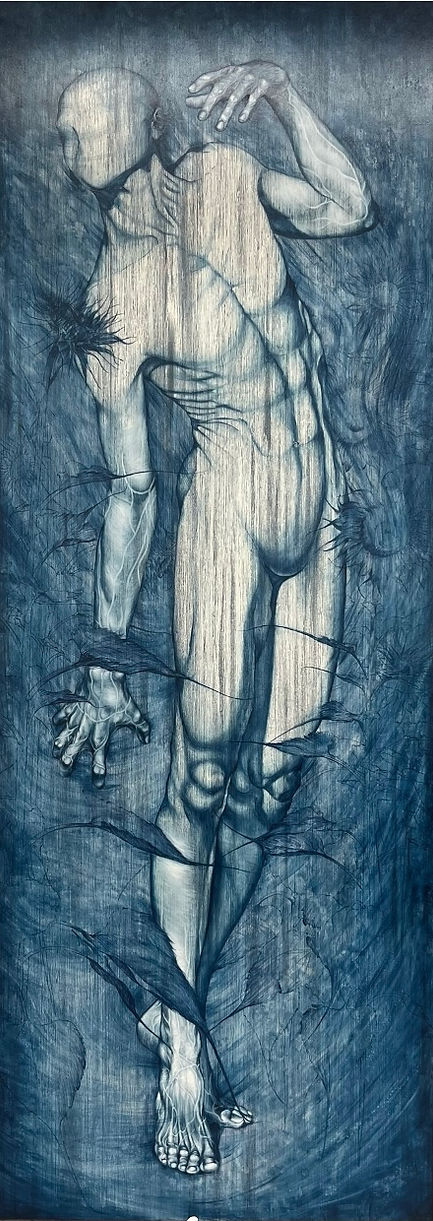
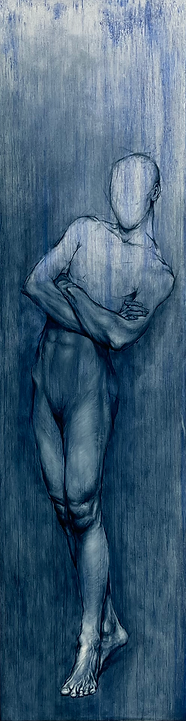

Indigo Flesh is a series of paintings that experiments with inserting abnormality into the structure of the human body as something seemingly complete and familiar. The creation of the image begins with a study of human proportions based on an eight-part structure, before changing the said system into a ten-part proportion and applying that discrepancy to the shape of the body, muscles, bones, and joints.
The bodies in the image are still constructed through detailed observation and understanding of anatomical structures, but certain proportions and gestures are distorted until they cannot occur according to the limitations of the actual human body. The abnormality is therefore not made to appear openly, but embedded within an appearance that still allows the viewer to recognize it as a human body.
Deep indigo is used as the dominant tone of the series, making skin, muscles, bones, and the surrounding space be under the same atmosphere. Humanity therefore still appears through the details of the body, while at the same time, the abnormality gradually emerges through relationships of proportion, posture, and structures that do not correspond with one another.
The size of the works is extended vertically to create a physical impact. In the artwork Indigo Flesh [3], measuring 300 × 110 cm, which makes the body exceed the perception of a general figurative image. While the artwork Indigo Flesh [2], measuring 190 × 50 cm, has a height approaching an actual human body, making the relationship between the body within the painting and the viewer’s body occur more directly.
Indigo Flesh therefore does not only aim to present an “abnormal body.” But it uses painting to experiment how abnormality can exist within a structure that appears normal, and when the perception at first glance makes us accept something as a human body, how looking closely can change that understanding.
Indigo Flesh
Indigo Flesh (3) 110 x 300 cm. oil on canvas
Indigo Flesh (2) 50 x 190 cm. oil on canvas
Indigo Flesh (1) 40 x 50 cm. oil on canvas
Indigo Flesh เป็นชุดงานจิตรกรรมที่ทดลองแทรกความผิดปกติลงไปภายในโครงสร้างของร่างกายมนุษย์ที่ดูสมบูรณ์และคุ้นเคย การสร้างภาพเริ่มต้นจากการศึกษาสัดส่วนร่างกายมนุษย์ตา โครงสร้าง 8 ส่วน ก่อนเปลี่ยนระบบดังกล่าวเป็นสัดส่วน 10 ส่วน และนำความคลาดเคลื่อนนั้นไปใช้กับรูปร่างของร่างกาย กล้ามเนื้อ กระดูก และข้อต่อ
ร่างกายในภาพยังคงถูกสร้างขึ้นจากการสังเกตและทำความเข้าใจโครงสร้างทางกายวิภาคอย่างละเอียด แต่สัดส่วนและท่าทางบางส่วนถูกบิดเบือนจนไม่สามารถเกิดขึ้นได้ตามข้อจำกัดของร่างกายมนุษย์จริง ความผิดปกติจึงไม่ได้ถูกทำให้ปรากฏอย่างโจ่งแจ้ง แต่แทรกตัวอยู่ภายในรูปลักษณ์ที่ยังคงทำให้ผู้ชมรับรู้ว่าเป็นร่างกายมนุษย์
สีครามเข้มถูกใช้เป็นโทนหลักของชุดงาน ทำให้ผิวหนัง กล้ามเนื้อ กระดูก และพื้นที่โดยรอบอยู่ภายใต้บรรยากาศเดียวกัน ความเป็นมนุษย์จึงยังคงปรากฏผ่านรายละเอียดของร่างกาย ขณะเดียวกัน ความผิดปกติก็ค่อยๆ ปรากฏขึ้นผ่านความสัมพันธ์ของสัดส่วน ท่าทาง และโครงสร้างที่ไม่สอดคล้องกัน
ขนาดของผลงานถูกขยายในแนวตั้งให้เกิดแรงปะทะทางกายภาพ ในผลงาน Indigo Flesh [3] ขนาด 300 × 110 เซนติเมตร ซึ่งทำให้ร่างกายมีขนาดเกินกว่าการรับรู้ของภาพเหมือนทั่วไป ขณะที่ผลงาน Indigo Flesh [2] ขนาด 190 × 50 เซนติเมตร มีความสูงใกล้เคียงกับร่างกายมนุษย์จริง ทำให้ความสัมพันธ์ระหว่างร่างกายในภาพกับร่างกายของผู้ชมเกิดขึ้นโดยตรงมากขึ้น
Indigo Flesh จึงไม่ได้มุ่งนำเสนอ “ร่างกายที่ผิดปกติ” เพียงอย่างเดียว แต่ใช้จิตรกรรมทดลองว่า ความผิดปกติสามารถดำรงอยู่ภายในโครงสร้างที่ดูปกติได้อย่างไร และเมื่อการรับรู้ในครั้งแรกทำให้เรายอมรับบางสิ่งว่าเป็นร่างกายมนุษย์แล้ว การมองอย่างละเอียดจะเปลี่ยนความเข้าใจนั้นได้อย่างไร
Luna Moth
series
There is a butterfly in my room


A painted elegy to the Luna Moth: A nocturnal creature naturally found in the depths of the night forest, yet it inexplicably appears within a human room. With its exquisite beauty and tragically short lifespan, this breathtaking transience is invoked to narrate contemporary love and relationships with profound accuracy...
2023
Choked Night (Blue Letter)

Choked Night (1) 55 x 31 cm. oil on linen
ถึงโลกครามในฐานะคำอำลา
เป็นจดหมายรักถึงดวงตาสีฟ้าเหล่านั้น
ณ คืนคราม
กระจ่างจันทร์
แด่ผู้ลุกไหม้ใต้เปลวไฟสีฝัน
สุดโค้งครามน้ำเงินนั่น
ถึงพวกเรา
To The Blue World as a farewell note.
As a love letter to those blue eyes.
Nightly,
Under The Blue Moon up-shine.
To those who burn in blue fire,
the most.

Choked Night (2) 40 x 55 cm. oil on linen
2020
Indigo Memory
ครามทรงจำ
Indigo represents a fragile state of emotion and time. The painting captures the liminal space between nostalgia and sorrow—a quiet, shattered emotional state reflecting the relationship we call "friendship," especially when the past, present, and future fail to align with human expectations.
An atmosphere of ambiguity permeates the work, where light and shadow exist within the intersection of reality and dreams. Between the surfaces of dim lighting and shadows, the stains of time seem to drift among the table and chairs. Indigo shadows spread and flow seamlessly between people, objects, places, and even the shadow of light itself. The artwork is rich with symbols and contextual cues that convey a very specific moment through an ordinary gathering of friends sitting in a circle: a space of repose. The canvas reveals everyday objects from that period—photographs, clothing, and notebook pages inscribed with poetry. Above all, the drinking glasses serve as crucial witnesses. They signify the shared time spent together in this relaxing space, while the individual identities that have been lost to the passage of time are vividly reflected in the unique characteristics of each glass.
สีคราม (Indigo) ถูกแทนค่าเป็นห้วงอารมณ์และช่วงเวลาอันเปราะบาง ภาพจิตรกรรมแสดงพื้นที่ตรงกลางระหว่างความคิดถึงกับความโศกเศร้า ภาวะอารมณ์แตกสลายในความเงียบที่แสดงถึงความสัมพันธ์ที่มีชื่อเรียกกันว่า “มิตรภาพ” เมื่ออดีต-ปัจจุบัน-อนาคต ไม่เป็นไปตามความคาดหวังของมนุษย์
บรรยากาศของความคลุมเครือ แสงและเงาที่ปรากฏในบริบทของความจริงกับความฝัน ระหว่างพื้นผิวของแสงสลัวกับเงาที่ปรากฏเป็นคราบของกาลเวลาลอยฟุ้งอยู่ท่ามกลางโต๊ะและเก้าอี้ เงาสีครามกระจายตัวกว้างลามไหลไปมาระหว่างคน-สิ่งของ-สถานที่ กระทั่งเงาของแสง ภาพจิตรกรรมเต็มไปด้วยสัญลักษณ์และบริบทที่สื่อถึงช่วงเวลาอย่างเฉพาะเจาะจง ผ่านการนั่งล้อมวงธรรมดากลุ่มเพื่อน: พื้นที่ของการพักผ่อนชนิดหนึ่ง ภาพจิตรกรรมปรากฏข้าวของเครื่องใช้ในช่วงเวลาดังกล่าว รูปภาพ เสื้อผ้า รูปภาพ หน้าสมุดที่ปรากฏเป็นบทกวี โดยเฉพาะแก้วน้ำซึ่งเป็นพยานชิ้นสำคัญ: มันแสดงออกถึงการใช้เวลาของคนหลายคนร่วมกันในพื้นที่แห่งการผ่อนคลาย และอัตลักษณ์ของแต่ละบุคคลที่สูญหายไปตามกาลเวลาก็ฉายชัดอยู่บนลักษณะเฉพาะของตัวแก้วน้ำเอง

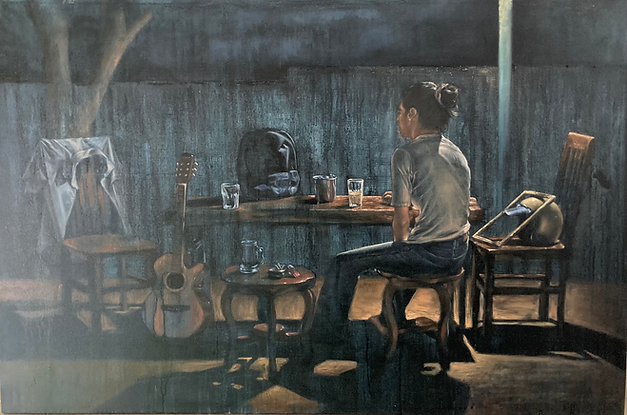
Wall Scene 170 x 110 cm. oil on canvas
Cigarette Chair 50 x 60 cm. oil on canvas

Note Scene 140 x 100 cm. oil on canvas

Table Scene 160 x 100 cm. oil on canvas

Timeless Indigo 220 x 200 cm. oil on canvas