
Trace of Being:
Contemplation in Emptiness
Trace of Being: Contemplation in Emptiness explores the conditions through which something appears and is perceived as what it is. The series begins with objects, images, and situations from everyday life, then changes the conditions through which they appear through colour, light, atmosphere, material, context, as well as the relationship between what is visible and what is absent. The series asks “When the conditions of appearance change, how can we still perceive something as what it is, and what allows it to remain what it is to us?”
The relationship between what appears and the meaning it carries takes different forms throughout the works: the relationship between a tree and a chair, a pine that appears through both the addition and removal of paint, the moon appearing through reflection, the horizon functioning both as a line of vision and as a physical trace, a tree appearing through the construction of the space surrounding it, a sunflower changing through different colours, light, and atmospheres, and night appearing within an intensely illuminated, almost white space. These works do not seek to assign fixed meanings to things, but use painting as a space for experimentation, asking “How is perception formed, and how can the certainty of perception be changed?”
In this series, painting is not only a means of presenting an image, but also a space for experimentation through painterly processes and visual language, including impasto, scraping, monochromatic colour, light and shadow, reflection, the relationship between form and surface, and the blurring of forms. These processes allow appearance and disappearance to occur simultaneously within the image, while traces, gaps, and changes resulting from the working process become part of the act of perception.
At the same time, titles and poems do not simply explain the images, but become part of the conditions through which meaning is constructed. Between word–image–meaning, what is seen and what is understood do not always correspond; they push against and challenge one another, creating a space in which perception moves between what we see, what we think, and the meanings we give to things.
The “trace” in this series refers not only to what remains from something that once existed, but also to what allows something that has changed, is not directly visible, or has partly disappeared to remain perceptible. Meanwhile, “emptiness” does not mean nothingness, but refers to the space between seeing and thinking, presence and absence, sameness and difference. It is a space in which meaning has not yet been fully determined and continues to take shape through seeing and perception. Therefore “Being” in this series is not presented as a fixed answer or a fixed concept, but as a question that emerges through the relationship between what appears, what we perceive, and what we think something is.
ร่องรอยของการดำรงอยู่
กับการใคร่ครวญในความว่าง
“ร่องรอยของการดำรงอยู่ กับการใคร่ครวญในความว่าง” สำรวจเงื่อนไขที่ทำให้บางสิ่งปรากฏและถูกรับรู้ว่าเป็นสิ่งนั้น ชุดผลงานเริ่มต้นจากวัตถุ ภาพ และสถานการณ์ในชีวิตประจำวัน ก่อนเปลี่ยนแปลงเงื่อนไขที่ทำให้สิ่งเหล่านั้นปรากฏ ผ่านสี แสง บรรยากาศ วัสดุ บริบท รวมไปถึงความสัมพันธ์ระหว่างสิ่งที่มองเห็นและสิ่งที่ไม่ปรากฏ ชุดผลงานตั้งคำถามว่า “เมื่อเงื่อนไขของการปรากฏขึ้นเปลี่ยนไป เราจะยังรับรู้สิ่งหนึ่งว่าเป็นสิ่งนั้นได้อย่างไร และอะไรคือสิ่งที่ทำให้มันยังคงเป็นสิ่งนั้นสำหรับเรา"
ความสัมพันธ์ระหว่างสิ่งที่ปรากฏกับความหมายของมันเกิดขึ้นผ่านรูปแบบที่แตกต่างกันในแต่ละผลงาน ทั้งความสัมพันธ์ระหว่างต้นไม้กับเก้าอี้ ต้นสนที่ปรากฏผ่านทั้งการเติมและการขูดสี ดวงจันทร์ที่ปรากฏผ่านเงาสะท้อน เส้นขอบฟ้าที่ทำหน้าที่เป็นทั้งเส้นของการมองเห็นและร่องรอยทางกายภาพ ต้นไม้ที่ปรากฏผ่านการสร้างพื้นที่แวดล้อมรอบตัวมัน ทานตะวันที่เปลี่ยนแปลงไปภายใต้สี แสง และบรรยากาศที่แตกต่างกัน รวมไปถึงกลางคืนที่ปรากฏขึ้นภายในพื้นที่สว่างจนเกือบขาว ผลงานเหล่านี้ไม่ได้มุ่งกำหนดความหมายตายตัวให้กับสิ่งต่างๆ แต่ใช้จิตรกรรมเป็นพื้นที่ทดลองว่า “การรับรู้ก่อตัวขึ้นอย่างไร และความแน่นอนของการรับรู้นั้นจะเปลี่ยนแปลงได้อย่างไรบ้าง”
จิตรกรรมในผลงานชุดนี้นอกจากส่วนหนึ่งที่เป็นการนำเสนอภาพ จึงยังหมายรวมไปถึงเป็นพื้นที่สำหรับการทดลองผ่านกระบวนการและภาษาทางจิตรกรรม เช่น สีนูนหนา การขูดสีออก สีเอกรงค์ แสงและเงา ภาพสะท้อน ความสัมพันธ์ระหว่างรูปกับพื้นผิว รวมถึงการทำให้รูปทรงพร่าเลือน กระบวนการเหล่านี้ทำให้การปรากฏและการหายไปเกิดขึ้นพร้อมกันในภาพ และทำให้ร่องรอย ช่องว่าง และการเปลี่ยนแปลงจากกระบวนการทำงานเข้ามามีส่วนร่วมต่อการรับรู้
ในขณะเดียวกัน ชื่อภาพและบทกวีไม่ได้ทำหน้าที่เพียงอธิบายภาพ แต่เป็นส่วนหนึ่งของเงื่อนไขที่ความหมายถูกประกอบสร้างขึ้น ระหว่าง คำ-ภาพ-ความหมาย สิ่งที่มองเห็นกับสิ่งที่เข้าใจจึงไม่ได้สอดคล้องกันเสมอไป คัดง้างความหมายซึ่งกันและกัน ซึ่งเปิดพื้นที่ให้การรับรู้เคลื่อนไหวระหว่างสิ่งที่เห็น สิ่งที่คิด และความหมายที่เรามอบให้กับมัน
“ร่องรอย” ในชุดผลงานนี้นอกจากหมายถึงร่องรอยที่หลงเหลือจากสิ่งที่เคยมีอยู่ มันยังหมายรวมถึงสิ่งที่ทำให้บางสิ่งซึ่งเปลี่ยนแปลง ไม่ปรากฏโดยตรง หรือหายไปบางส่วน จะยังคงสามารถถูกรับรู้ได้ ในขณะที่ “ความว่าง” ไม่ได้หมายถึงความไม่มี แต่เป็นพื้นที่ช่องว่างระหว่างการมองเห็นกับการนึกคิด การมีอยู่กับการหายไป ความเหมือนกับความแตกต่าง เป็นพื้นที่ที่ความหมายยังไม่ถูกกำหนดอย่างสมบูรณ์ และยังคงก่อตัวขึ้นผ่านการมองเห็นและการรับรู้ เพราะฉะนั้นแล้ว “การดำรงอยู่” ในชุดผลงานนี้จึงไม่ได้ถูกเสนอเป็นคำตอบหรือแนวความคิดตายตัว แต่เป็นคำถามที่เกิดขึ้นผ่านความสัมพันธ์ระหว่างสิ่งที่ปรากฏ สิ่งที่เรารับรู้ และสิ่งที่เราคิดว่าสิ่งนั้นเป็น

Wooden and Woods

เขานั่งพักกลางอื่นที่ยืนล้อม
แล้วเขาก็กลายเป็นอีกอื่น ทั้งที่เคยเป็นเหมือนกัน
ผลักตัด ถูกขัดไส
จนถูกขับไส
เขากลายเป็นอื่น ทั้งที่เคยยืนเหมือนกัน
.
เขาคืนความเป็นอื่นไม่ไหว
กลับไปเป็นเหมือนกันก็ไม่ได้
ที่ทางสุดท้าย—
คือดำรงอยู่ภายในรอบๆนอกของความจริง
Wooden and Woods 335 x 190 cm. oil on canvas 2026


He rested amidst the standing others,
then became another other,
though once they were the same.
Shoved and severed, sanded and planed,
until he was cast out.
He became other, though once they stood
together.
.
He cannot return the otherness,
nor can he return to sameness.
The last-life dwelling—
is to exist within the peripheries of reality
Wooden and Woods presents a wooden chair within a forest. The chair and the trees appear to be different things, yet they share a relationship through wood as a material, which has been cut, shaped, planed, and transformed from a natural material into an object with a different form and function.
The work considers how something can become “other” when its form, function, and context change. The chair is separated from the tree as an object with its own function and meaning, while the material relationship between the chair and the tree continues to connect the two. The use of monochromatic white-on-white, together with the process of creating the trace of the chair through building up and scraping away paint, makes the boundary between the chair and the forest ambiguous. Both the object and its surrounding environment therefore appear while almost disappearing at the same time.
The work explores the shifting boundaries between sameness and difference, appearance and disappearance, and asks what remains when something can no longer return to what it once was, while at the same time it cannot be completely separated from the original relationship of which it was once a part.
Wooden and Woods นำเสนอภาพของเก้าอี้ไม้ท่ามกลางป่า เก้าอี้กับต้นไม้ปรากฏให้เห็นเป็นสิ่งที่แตกต่างกัน แต่ทั้งสองมีความสัมพันธ์ร่วมกันผ่านวัสดุไม้ ซึ่งถูกตัด ขัด ไส และแปรสภาพจากวัสดุธรรมชาติไปสู่วัตถุที่มีรูปทรงและหน้าที่การใช้งานที่แตกต่างออกไป
ผลงานชิ้นนี้ชวนให้พิจารณาว่า บางสิ่งกลายเป็น “สิ่งอื่น” ได้อย่างไร เมื่อรูปทรง หน้าที่ และบริบทของมันเปลี่ยนแปลงไป เก้าอี้ถูกแยกออกจากต้นไม้ในฐานะวัตถุที่มีหน้าที่และความหมายเฉพาะของมันเอง ขณะที่ความสัมพันธ์ทางวัสดุระหว่างเก้าอี้กับต้นไม้ยังคงเชื่อมโยงสิ่งทั้งสองเข้าหากัน การใช้สีเอกรงค์แบบขาวบนขาว รวมถึงกระบวนการสร้างร่องรอยของเก้าอี้ผ่านการเติมสีนูนหนาและการขูดสีออก ทำให้เส้นแบ่งระหว่างเก้าอี้กับป่าเกิดความคลุมเครือ ทั้งตัววัตถุและสภาพแวดล้อมจึงปรากฏขึ้นและเกือบกลืนหายไปในเวลาเดียวกัน
ผลงานชิ้นนี้สำรวจขอบเขตที่เลื่อนไหลระหว่าง ความเหมือนและความต่าง การปรากฏขึ้นและการหายไป และตั้งคำถามว่า สิ่งใดจะยังคงหลงเหลืออยู่ เมื่อบางสิ่งไม่สามารถหวนกลับไปเป็นแบบที่มันเคยเป็นได้อีกต่อไป แต่ในขณะเดียวกันก็ไม่สามารถแยกขาดจากความสัมพันธ์เดิมที่มันเคยเป็นส่วนหนึ่งได้อย่างสมบูรณ์

The Pine's Trace [2]
80 x 270 cm.
oil on canvas 2026


The Pine's Trace
That pine still stands tall,
catching the breeze that has swept through it for decades.
It is, and we see.
In the very moment we feel its presence,
Grasping and sensing every layer of flesh and bark.
Perhaps drifting so deep as to hear the wind.
Yet, the one thing left unanswered amidst the cycles of time bending to the wind—
Where, truly, is the pine?


The Pine's Trace [1]
80 x 270 cm.
oil on canvas 2026
The Pine’s Trace consists of a pair of paintings that explore the “trace” of a pine tree through two completely opposite painterly processes. In one work, the pine is constructed by building up white paint on the surface, while in the other, the pine gradually emerges through scraping and removing layers of paint from the surface.
Although both paintings lead us to recognize and remember the same pine tree, the tree itself never appears on the canvas as a physical object. What appears is only the “trace” that allows us to see and perceive its existence.
The work therefore asks a simple question, “Where, truly, is the pine?” Through the construction of the image using painterly techniques, we can see its form, imagine its surface, bark, and branches, or even imagine the sound of wind passing through it. Yet what we encounter in the paintings is not the actual tree itself, but only a trace produced through the opposing processes of adding and removing oil paint. By presenting these contrasting processes as a pair, the work invites us to consider how things can be perceived through their traces, and how something that does not appear directly can continue to appear through fragments of what remains.
The Pine’s Trace ประกอบด้วยภาพจิตรกรรมคู่ที่สำรวจ “ร่องรอย” ของต้นสน ผ่านกระบวนการทางจิตรกรรมที่ตรงกันข้ามอย่างสิ้นเชิง ในผลงานชิ้นหนึ่ง ต้นสนถูกสร้างรูปขึ้นจากการเติมเนื้อสีขาวลงบนพื้นผิว ในขณะที่อีกชิ้นหนึ่ง ต้นสนค่อยๆปรากฏให้เห็นผ่านการขูดและลอกชั้นสีบนพื้นผิวออก
แม้ว่าภาพจิตรกรรมทั้งสองชิ้นจะนำทางให้เรารับรู้และจดจำได้ว่าเป็นต้นสนต้นเดียวกัน แต่ต้นสนเองไม่เคยปรากฏอยู่บนผืนผ้าใบในฐานะวัตถุทางกายภาพ สิ่งที่ปรากฏมีเพียง “ร่องรอย” ที่ทำให้เราสามารถมองเห็นและรับรู้ถึงการมีอยู่ของมันได้เท่านั้น
ผลงานชิ้นนี้จึงตั้งคำถามเรียบง่ายว่า “จริงๆแล้วต้นสนอยู่ที่ไหนกันแน่?” เราสามารถมองเห็นรูปทรงของมัน จินตนาการถึงพื้นผิว เปลือกไม้ กิ่งก้าน หรือแม้กระทั่งจินตนาการถึงเสียงสายลมที่พัดผ่านตัวมัน ผ่านการประกอบสร้างด้วยเทคนิคทางจิตรกรรม ทว่าสิ่งที่เรากำลังเผชิญหน้าอยู่ในภาพจิตรกรรมกลับไม่ใช่ตัวต้นไม้จริงๆ หากแต่เป็นเพียงร่องรอยที่เกิดจากกระบวนการตรงข้ามของการเติมเข้าและการลบออกของสีน้ำมัน ด้วยการนำเสนอกระบวนการที่อยู่คนละขั้วเป็นภาพคู่กัน ผลงานชิ้นนี้ชวนให้เราใคร่ครวญว่า สิ่งต่างๆ สามารถถูกรับรู้ผ่านร่องรอยของมันได้อย่างไร และสิ่งที่ไม่ปรากฏโดยตรงจะยังคงปรากฏให้เราเห็นผ่านเศษเสี้ยวของสิ่งที่หลงเหลืออยู่ได้อย่างไร

Humble Hold 100 x 62 cm. oil on linen 2026
Humble Hold
humble, he holds
hardly a hush within his hand ‘round
How long? Who hardly knows?
as long as he holds
as long as she will be held ‘round—
within his humble—
and humble holds
Humble Hold presents an image of a pair of hands touching within an empty space. The gesture of the hands may be read as holding hands, embracing, supporting, submitting in humility, or simply being beside one another. The painting deliberately leaves the nature of this gesture ambiguous and unresolved.
The figures in the image are never fully revealed. Only the hands and the ends of the sleeves appear, blending into the surrounding empty space. They are fragments of the body that the viewer must use their imagination to complete. As a result, what appears in the image exists alongside what is absent: the unseen body, the surrounding space, and even the situation that led to the gesture.
The work reduces the scene from its original source of inspiration, which concerned a human relationship, to a single gesture between a pair of hands. Through this reduction, the meaning of the gesture becomes uncertain. Rather than completing the story within the image, the painting opens a space for the possibilities of what is not shown. What is absent therefore becomes an important part of the act of looking, allowing the viewer to reconstruct what cannot be seen from what remains visible.
The work explores how perception is formed, not only through what is present before us, but also through what is absent.
Humble Hold ถ่ายทอดภาพของมือคู่หนึ่งที่สัมผัสกันท่ามกลางพื้นที่ว่างเปล่า การกระทำของมือคู่นี้อาจถูกมองว่าเป็นการกุมมือ การโอบกอด การประคอง การสยบยอมนอบน้อม หรืออาจเป็นเพียงการอยู่เคียงข้างกัน ภาพจิตรกรรมชิ้นนี้จงใจปล่อยให้ท่าทีของการกระทำดังกล่าวคลุมเครือและไร้บทสรุป
รูปร่างของบุคคลในภาพไม่เคยถูกเปิดเผยอย่างสมบูรณ์ สิ่งที่ปรากฏมีเพียงมือและปลายแขนเสื้อที่กลืนไปกับพื้นที่ว่าง เป็นเพียงเศษเสี้ยวของร่างกายที่ผู้ชมต้องใช้จินตนาการเติมเต็มส่วนที่เหลือด้วยตนเอง ด้วยเหตุนี้ สิ่งที่ปรากฏขึ้นในภาพจึงดำรงอยู่ควบคู่กับสิ่งที่หายไป ไม่ว่าจะเป็นร่างกายที่มองไม่เห็น พื้นที่แวดล้อมโดยรอบ หรือแม้แต่สถานการณ์เบื้องหลังที่ทำให้เกิดการกระทำนั้นขึ้น
ผลงานชิ้นนี้ลดทอนฉากจากแรงบันดาลใจต้นทางซึ่งเกี่ยวข้องกับความสัมพันธ์ของมนุษย์ จนเหลือเพียงท่าทีหนึ่งของมือคู่หนึ่ง การลดทอนนี้ทำให้ความหมายของการกระทำกลายเป็นความไม่แน่ชัด แทนที่จะเติมเต็มเรื่องราวในภาพให้สมบูรณ์ จิตรกรรมกลับเปิดพื้นที่ให้กับความเป็นไปได้ของสิ่งที่ไม่ได้ปรากฏ สิ่งที่หายไปจึงเข้ามามีบทบาทสำคัญขณะที่เราจ้องมอง เปิดโอกาสให้ผู้ชมประกอบสร้างสิ่งที่มองไม่เห็นขึ้นใหม่จากสิ่งที่ยังคงปรากฏอยู่
ผลงานชิ้นนี้สำรวจว่า การรับรู้ของเราก่อตัวขึ้นอย่างไร ซึ่งไม่ได้ประกอบขึ้นจากเพียงสิ่งที่มีอยู่ตรงหน้าเท่านั้น แต่ยังเกิดขึ้นจากสิ่งที่ขาดหายไปด้วยเช่นกัน

Moon River 150 x 100 cm. oil on canvas 2026

Moon River
แล้วฝันกลับจมลงริมขอบโค้ง
กลืนหาย...อย่างที่เคย
.
จำยอม ต้องมองจันทร์สะท้อนน้ำ
ถึงแม้มันไม่สวยงาม—
อย่างที่เงย
And the dream sinks at the curved edge,
Swallowed away... as always.
.
Left to yield, I gaze at the moon upon the water,
Even though it is never as beautiful—
As the upward gaze.
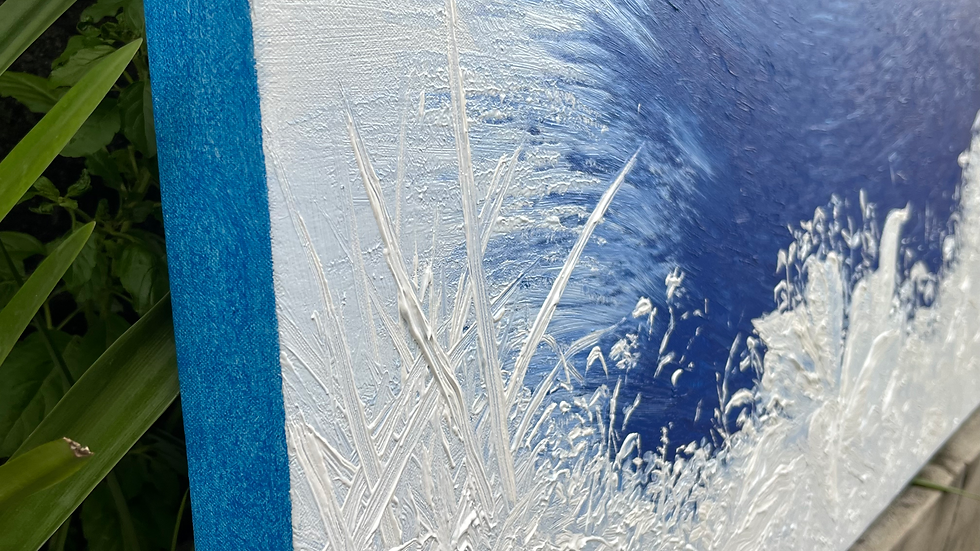
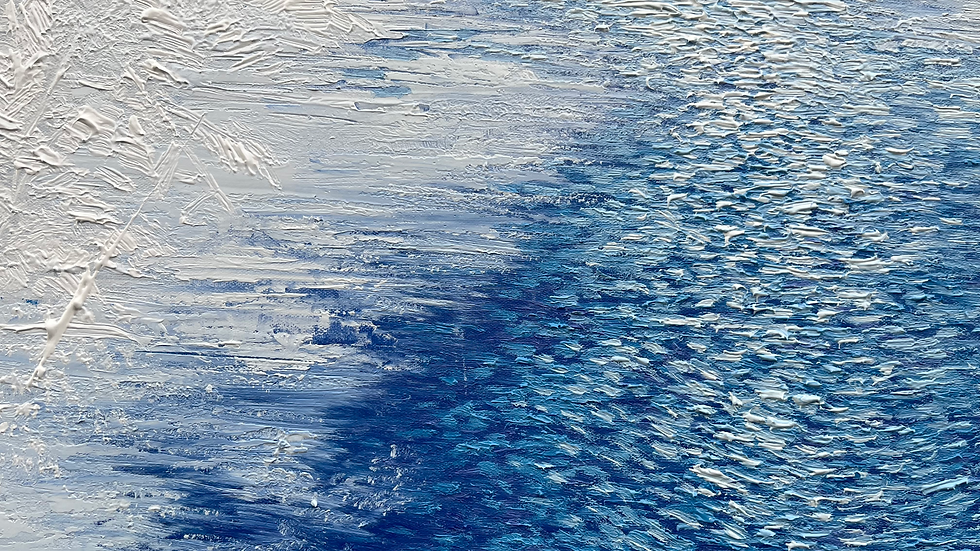
Moon River presents a quiet landscape dominated by a vast expanse of blue water. The moon is not revealed directly, but appears instead through its reflection on the surface of the water. The work invites contemplation of the difference between an object itself and the image through which we perceive that object. The reflection is not the actual moon, yet it allows the moon to appear in another form. What we encounter, therefore, is not the object directly, but something that allows us to perceive the appearance and existence of that object.
The accompanying poem describes looking at the moon through its reflection rather than looking up at the moon above. The reflection does not correspond perfectly to its source, but changes according to the surface of the water and the position from which it is viewed.
The work explores how something can remain perceptible even when it does not appear directly before us. Through the process of painting, the moon remains outside the frame, yet part of it becomes visible through something that is not the moon itself.
Moon River ถ่ายทอดภาพทิวทัศน์เงียบสงบที่โดดเด่นด้วยผืนน้ำสีน้ำเงินกว้างใหญ่ ดวงจันทร์ไม่ได้ถูกเผยให้เห็นโดยตรง แต่ปรากฏขึ้นผ่านเงาสะท้อนบนผิวน้ำแทน ผลงานชิ้นนี้ชวนให้ใคร่ครวญถึงความแตกต่างระหว่าง ตัววัตถุ กับภาพที่ทำให้เรารับรู้ถึงวัตถุนั้น เงาสะท้อนไม่ใช่ตัวดวงจันทร์จริงๆ แต่มันทำให้ดวงจันทร์ปรากฏขึ้นในอีกรูปแบบหนึ่ง ดังนั้น สิ่งที่เรากำลังเผชิญหน้าอยู่จึงไม่ใช่ตัววัตถุโดยตรง แต่เป็นบางสิ่งที่ทำให้เราสามารถรับรู้ถึงรูปลักษณ์และการมีอยู่ของวัตถุนั้นได้
บทกวีที่ประกอบร่วมกับภาพบอกเล่าถึงการมองดวงจันทร์ผ่านเงาสะท้อน แทนที่จะแหงนมองไปยังดวงจันทร์เบื้องบน ภาพสะท้อนนั้นไม่ได้เหมือนกับสิ่งต้นแบบโดยสมบูรณ์ แต่เปลี่ยนแปลงไปตามพื้นผิวของน้ำและตำแหน่งที่ถูกมอง
ผลงานชิ้นนี้สำรวจว่าสิ่งใดสิ่งหนึ่งยังคงถูกรับรู้ได้อย่างไร แม้ว่ามันจะไม่ได้ปรากฏอยู่ตรงหน้าโดยตรง ผ่านกระบวนการทางจิตรกรรม ดวงจันทร์ยังคงอยู่ภายนอกกรอบภาพ ทว่าบางส่วนของมันกลับกลายเป็นสิ่งที่มองเห็นได้ผ่านสิ่งที่ไม่ใช่ตัวดวงจันทร์เอง

The Whitest Night 300 x 60 cm. oil on canvas 2026
The Whitest Night
ผมอยู่ตรงนี้ ที่วันคืนไม่ผันเพราะตะวันลืมฟ้า
โลกตกอยู่ใต้อันธกาลสีขาว
กลางคืนยาวนานกว่าความฝัน
และมันทำให้คิดถึงคุณมากเหลือเกิน
And the dream sinks at the curved edge,
Swallowed away... as always.
.
Left to yield, I gaze at the moon upon the water,
Even though it is never as beautiful—
As the upward gaze.
The Whitest Night depicts the interior of a room at night, where deep blue darkness appears beyond the window while almost the entire interior is illuminated in white. Yet this intense brightness does not make the space feel warmer or clearer. On the contrary, the objects within the room begin to lose their visual clarity, creating a sense of emptiness despite the brightness that fills the space.
The work originates from the experience of returning home at night and sitting by the window. Although darkness surrounded the space outside, the brightly illuminated interior created another form of nighttime atmosphere within the room. This experience became the starting point for exploring how the atmosphere of light can change the way we see and perceive a space.
The title The Whitest Night reverses the familiar association between nighttime and darkness. In the work, darkness appears not only through the deep blue atmosphere outside the window, but also through the excessive whiteness and brightness within the room. The accompanying poem describes this condition as “white darkness,” extending the image beyond physical space into the psychological states of longing and absence.
Rather than depicting loneliness directly, the work constructs a visual condition through which emptiness can be perceived within an illuminated space. It invites us to consider how changes in light, colour, and visual clarity can transform our perception of a space, as well as the feelings that arise within it.
The Whitest Night ถ่ายทอดบรรยากาศภายในห้องยามค่ำคืน ซึ่งความมืดมิดสีน้ำเงินเข้มปรากฏอยู่นอกหน้าต่าง ในขณะที่พื้นที่ภายในเกือบทั้งหมดกลับสว่างด้วยสีขาว แต่ความสว่างจ้าดังกล่าวกลับไม่ได้ทำให้พื้นที่รู้สึกอบอุ่นหรือชัดเจนขึ้น ในทางกลับกัน วัตถุต่างๆภายในห้องกลับเริ่มสูญเสียความชัดเจนทางการมองเห็น ก่อให้เกิดความรู้สึกว่างเปล่าภายในพื้นที่ แม้ทุกสิ่งจะสว่างไสวก็ตาม
ผลงานชิ้นนี้เริ่มต้นจากประสบการณ์การกลับบ้านในยามค่ำคืนและนั่งลงตรงริมหน้าต่าง แม้ภายนอกจะถูกปกคลุมด้วยความมืด แต่พื้นที่ภายในที่สว่างไสวกลับสร้างบรรยากาศของค่ำคืนขึ้นภายในห้องในอีกรูปแบบหนึ่ง ประสบการณ์ดังกล่าวกลายเป็นจุดเริ่มต้นในการสำรวจว่า บรรยากาศของแสงสามารถเปลี่ยนแปลงวิธีที่เรามองเห็นและรับรู้พื้นที่หนึ่งๆได้อย่างไร
ชื่อผลงาน The Whitest Night พลิกกลับความเชื่อมโยงระหว่างค่ำคืนกับความมืดมิด ภายในผลงาน ความมืดไม่ได้ปรากฏขึ้นผ่านสีน้ำเงินเข้มของบรรยากาศภายนอกหน้าต่างเท่านั้น แต่ยังปรากฏผ่านความขาวสว่างที่มากเกินไปภายในห้องด้วย บทกวีที่ประกอบกับผลงานพรรณนาสภาวะนี้ว่าเป็น “ความมืดสีขาว” (white darkness) ซึ่งขยายขอบเขตของภาพจากพื้นที่ทางกายภาพไปสู่สภาวะทางจิตใจของความโหยหา (longing) และการขาดหายไป (absence)
แทนที่จะถ่ายทอดความอ้างว้างออกมาโดยตรง ผลงานชิ้นนี้กลับสร้างสภาวะทางการมองเห็นที่ทำให้ความว่างเปล่าปรากฏขึ้นภายในพื้นที่สว่าง ผลงานชวนให้พิจารณาว่า ความเปลี่ยนแปลงของแสง สี และความชัดเจนในการมองเห็น สามารถแปรเปลี่ยนการรับรู้ของเราต่อพื้นที่หนึ่งๆ รวมถึงความรู้สึกที่เกิดขึ้นภายในพื้นที่นั้นได้อย่างไร
Parallel Horizon

ตรงเส้นบรรจบของผืนฟ้ากับผืนน้ำ
สองเส้นขอบระหว่างฟ้ากับน้ำได้บังเกิดขึ้นขนานแนบชิดกัน
ผู้คนเอาแต่จ้องมองไปสุดตา
พวกเขาควานเส้นขอบไหนกัน
บางที…
สิ่งเหล่านั้นมันอาจเกินเส้นขอบฟ้าการรับรู้ของเราไปแล้ว
At the convergence of sky and water,
two distinct edges arise,
lying closely parallel.
People do nothing but gaze out as far as the eye can reach.
Which edge are they searching for?
Perhaps...
such things are already beyond the horizon of our perception

Parallel Horizon 140 x 100 cm. oil on canvas 2026
Parallel Horizon begins with a familiar act, looking out toward the horizon of the sea. The horizon appears to mark the furthest point of our field of vision, a line that we can see but cannot reach. The work therefore asks, what it is that we are actually looking for when we direct our gaze toward this distant line.
The painting places two horizontal lines close to one another: the distant horizon where the sea meets the sky, and the waterline that leaves a trace on the rock. Although the two appear visually similar, they serve different functions. The horizon defines the limit of our vision, while the waterline records the physical movement of the water through the trace it leaves on the rock in the foreground, creating a shifting tension between near and far that confronts itself. This difference creates a tension between “what can be seen” and “what can be perceived.” We can see the horizon, but we cannot see beyond it. In contrast, the waterline allows us to perceive something that has happened through the trace it has left behind.
The work does not consider the horizon merely as an element of the landscape, but also as a boundary of perception. We direct our gaze toward the furthest edge of what we can see and confront the boundary between what we are able to see and what lies beyond our vision.
Parallel Horizon เริ่มต้นจากพฤติกรรมอันแสนคุ้นเคย นั่นคือการทอดสายตามองออกไปยังเส้นขอบฟ้าแห่งท้องทะเล เส้นขอบฟ้าดูราวกับเป็นจุดไกลสุดของระยะการมองเห็น เป็นเส้นที่เราสามารถมองเห็นได้ แต่ไม่สามารถเอื้อมไปถึงได้ ผลงานชิ้นนี้จึงตั้งคำถามว่า แท้จริงแล้วเรากำลังมองหาอะไรอยู่กันแน่ เมื่อเราทอดสายตามองไปยังเส้นสายอันห่างไกลนี้
ภาพจิตรกรรมชิ้นนี้ได้จัดวางเส้นแนวนอนสองเส้นไว้ใกล้กัน นั่นคือ เส้นขอบฟ้าห่างไกลที่ซึ่งผืนทะเลบรรจบกับแผ่นฟ้า และเส้นระดับน้ำที่ประทับร่องรอยอยู่บนโขดหิน แม้ทั้งสองจะปรากฏใกล้เคียงกัน แต่หน้าที่ของพวกมันแตกต่างกัน เส้นขอบฟ้าเป็นตัวกำหนดขีดจำกัดของการมองเห็น ในขณะที่เส้นระดับน้ำทำหน้าที่บันทึกการเคลื่อนไหวทางกายภาพของผืนน้ำผ่านร่องรอยที่ทิ้งไว้บนโขดหินด้านหน้า สร้างภาวะสลับใกล้-ไกลซึ่งปะทะกันเอง ความแตกต่างนี้ได้สร้างภาวะความตึงเครียดระหว่าง “สิ่งที่สามารถมองเห็นได้” กับ “สิ่งที่สามารถรับรู้ได้” เราสามารถมองเห็นเส้นขอบฟ้าได้ แต่ไม่สามารถมองทะลุข้ามมันไปได้ ในทางกลับกัน เส้นระดับน้ำอนุญาตให้เรารับรู้ถึงสิ่งที่เคยเกิดขึ้น ผ่านร่องรอยที่มันได้ทิ้งเอาไว้
ผลงานชิ้นนี้ไม่ได้พิจารณาจัดวางเส้นขอบฟ้าในฐานะองค์ประกอบหนึ่งของทิวทัศน์เท่านั้น แต่ยังหมายรวมไปถึงเส้นแบ่งขอบเขตของการรับรู้ เราทอดสายตามองไปยังสุดขอบของการมองเห็น และเผชิญหน้ากับขอบเขตระหว่างสิ่งที่เราสามารถมองเห็นได้ กับสิ่งที่อยู่นอกเหนือจากการมองเห็นของเรา
The Yew [1] 200 x 100 cm. oil on canvas 2025


The Yew
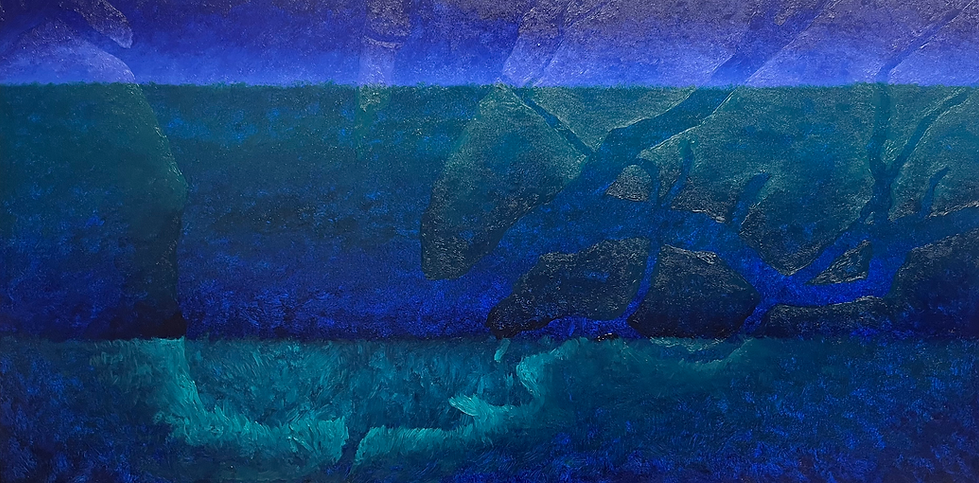


The Yew [2] 200 x 100 cm. oil on canvas 2025

คอยแต่คิดถึงอยู่ตรงต้นยู
แดดจ้า ยูชูยอดโอนอ่อน
:ฉันคิดถึง
พายุขย้ำ ยูทอดกิ่งคว่ำรับฝนพรำ
:ฉันยังคิดถึง
ลมหนาวโชยซ้ำ ใบยูล่วงล้ำโรยรา
:พาฉันคิดถึง
ฤดูกาลนานพ้น ยูใหญ่โค่นหล่น
:ฉันยังคง…คอยแต่คิดถึง
.
ไม่รู้ใครน่าเศร้ากว่ากัน
ความคิดถึงของฉัน
หรือคืนวันของต้นยู
The Yew [3] 30 x 40 cm. oil on canvas 2025

The Yew [4] 50 x 40 cm. oil on canvas 2025
Always longing, right by the Yew.
Blazing sun, the Yew lifts its gently swaying crown.
:I miss you.
Storms ravage,
the Yew bows its branches to the pouring rain.
:I still miss you.
Cold winds strike, the Yew's leaves wither and fall.
:It makes me miss you.
Seasons wear on, the great Yew topples down.
:I remain... always longing, missing you.
.
I don't know which is sadder:
my endless longing,
or the passing days of the Yew.

Installed back-to-back, "The Yew" prevents viewers from seeing both images simultaneously, directly reflecting the artwork's concept.

The Yew consists of two paintings based on a yew tree that is several centuries old. Both works depict the same tree through painting processes that allow it to appear in two different ways.
In the first painting, the tree is constructed directly by building up the paint. In the second, paint is applied to the surrounding atmosphere rather than directly onto the tree, allowing its form to emerge through differences in surface, paint texture, and empty space. These two approaches ask how the same thing can become visible under different pictorial conditions. In one painting, the tree is constructed as a form, in the other, it appears through the space surrounding it. The work therefore shifts attention away from the tree as an object and toward the experiences and conditions through which we perceive it.
The Yew creates another condition of seeing through its installation. The two paintings are installed back-to-back, with their visual elements connecting across the edges of the canvases. As a result, The Yew [1] and The Yew [2] cannot be seen at the same time. As the viewer moves around the work, one image remains as a lingering visual memory while the other is being seen. When one painting is visible to the eye, the other continues to exist in the viewer’s mind, alternating as the viewer moves around the work.
Through the difference between the two paintings, The Yew asks how something can remain recognizable under changing conditions. The tree does not appear only through what is painted as the tree itself; it can also emerge through what is painted around it. It appears through direct vision, but also through what remains in the viewer’s perception and memory.
The Yew ประกอบด้วยภาพจิตรกรรมสองชิ้นที่มีต้นแบบมาจากต้นยู (yew tree) อายุหลายศตวรรษ ผลงานทั้งสองถ่ายทอดภาพของต้นไม้ต้นเดียวกัน ผ่านกระบวนการทางจิตรกรรมที่ทำให้มันปรากฏขึ้นในสองรูปแบบที่แตกต่างกัน
ในภาพจิตรกรรมชิ้นแรก ต้นไม้ถูกสร้างรูปขึ้นมาโดยตรงผ่านการเติมเนื้อสีลงไป ส่วนในชิ้นที่สอง สีถูกเติมลงในบรรยากาศแวดล้อมแทนที่จะเป็นที่ตัวต้นไม้โดยตรง ปล่อยให้รูปร่างของต้นไม้ปรากฏขึ้นผ่านความแตกต่างของพื้นผิว เนื้อสี และพื้นที่ว่าง วิธีการทั้งสองตั้งคำถามว่า สิ่งเดียวกันสามารถปรากฏให้มองเห็นได้อย่างไรภายใต้เงื่อนไขทางจิตรกรรมที่แตกต่างกัน ในภาพหนึ่ง ต้นไม้ถูกสร้างขึ้นในฐานะรูปร่าง แต่อีกภาพหนึ่ง มันปรากฏขึ้นผ่านพื้นที่แวดล้อมโดยรอบ ผลงานจึงเบนความสนใจจากต้นไม้ในฐานะวัตถุ ไปสู่ประสบการณ์และเงื่อนไขต่าง ๆ ที่ทำให้เรารับรู้ถึงตัวมันได้
The Yew สร้างเงื่อนไขของการมองเห็นผ่านการติดตั้งภาพจิตรกรรมทั้งสองให้ประกบหลังเข้าหากัน โดยภาษาภาพจะเชื่อมต่อกันตรงขอบของเฟรมผ้าใบ ด้วยวิธีนี้ The Yew [1] และ The Yew [2] จึงไม่สามารถถูกมองเห็นพร้อมกันได้ และเกิดเป็นภาพที่คงค้างอยู่ในความทรงจำของผู้ชมขณะที่เดินรอบผลงาน เมื่อมองภาพหนึ่งด้วยตา อีกภาพหนึ่งจะยังคงปรากฏอยู่ในความนึกคิด และสลับกันไปตามการเคลื่อนที่ของผู้ชม
ผ่านความแตกต่างระหว่างภาพจิตรกรรมทั้งสองชิ้น The Yew ชวนให้พิจารณาว่า สิ่งหนึ่งจะยังคงถูกรับรู้ได้อย่างไรภายใต้เงื่อนไขที่เปลี่ยนแปลงไป ต้นไม้ไม่ได้ปรากฏขึ้นเพียงผ่านสิ่งที่ถูกวาดให้เป็นต้นไม้เท่านั้น แต่ยังปรากฏผ่านสิ่งที่ถูกวาดไว้ล้อมรอบตัวมัน ผ่านการมองเห็นด้วยตา และผ่านการรับรู้ที่ยังคงอยู่ในความคิดของผู้ชม
The Midnight & The Sun

The Midnight & The Sun [1] 33 x 60 cm. oil on canvas 2025

The Midnight & The Sun [2] 33 x 60 cm. oil on canvas 2025
Word—Image—Meaning
I cannot be certain.
Between The Midnight and The Sun, which of them makes it—truly itself
The Midnight & The Sun is a pair of paintings depicting sunflowers under different conditions of colour, atmosphere, and light. One painting presents white sunflowers against a deep blue background, while the other depicts blue sunflowers against a bright white background. Both works employ the impasto technique, allowing both the flowers and the atmosphere to emerge not only through the colour of the painting, but also through the physical texture of the paint on the canvas.
The two paintings deliberately leave the relationship between the images and their titles uncertain. Which painting is The Midnight, and which is The Sun? This question becomes even more ambiguous as the familiar associations between sunflowers, the sun, daytime and nighttime atmospheres, and our expectations of colour are unsettled. The work therefore explores what allows something to continue to be recognized as what it is when the conditions of its appearance change. Colour, light, atmosphere, surface, and language all influence how an image is perceived, but no single element can fully determine its meaning.
The text accompanying the paintings allows this relationship to remain unresolved. Rather than assigning a specific meaning to each painting, The Midnight & The Sun asks, within the relationship between word-image-meaning, what allows something to become what it is and continue to exist as itself?
The Midnight & The Sun เป็นภาพจิตรกรรมคู่ที่นำเสนอภาพดอกทานตะวันภายใต้เงื่อนไขที่แตกต่างกันของสี บรรยากาศ และแสง ภาพจิตรกรรมชิ้นหนึ่งถ่ายทอดภาพดอกทานตะวันสีขาวตัดกับพื้นหลังสีน้ำเงินเข้ม ในขณะที่อีกภาพหนึ่งนำเสนอดอกทานตะวันสีน้ำเงินตัดกับพื้นหลังสีขาวสว่าง ผลงานทั้งสองใช้เทคนิคสีนูนหนา (impasto) ซึ่งทำให้ทั้งดอกไม้และบรรยากาศไม่ได้ปรากฏขึ้นผ่านมิติของสีในงานจิตรกรรมเท่านั้น แต่ยังปรากฏผ่านพื้นผิวทางกายภาพของเนื้อสีบนภาพด้วย
ภาพจิตรกรรมทั้งสองจงใจปล่อยให้ความสัมพันธ์ระหว่างภาพกับชื่อภาพมีความไม่แน่ชัด ภาพไหนคือ The Midnight และภาพไหนคือ The Sun คำถามนี้ยิ่งคลุมเครือมากขึ้นเมื่อความเชื่อมโยงอันคุ้นเคยระหว่างดอกทานตะวัน ดวงอาทิตย์ บรรยากาศกลางวันและกลางคืน ตลอดจนสีสันที่เราคาดหวัง ถูกสั่นคลอน ผลงานชิ้นนี้จึงสำรวจว่า องค์ประกอบใดทำให้บางสิ่งยังคงถูกรับรู้ว่าเป็นสิ่งนั้น เมื่อเงื่อนไขที่ทำให้มันปรากฏเปลี่ยนแปลงไป สี แสง บรรยากาศ พื้นผิว และภาษา ล้วนมีอิทธิพลต่อวิธีที่ภาพถูกรับรู้ แต่ไม่มีองค์ประกอบใดเพียงอย่างเดียวที่กำหนดความหมายของภาพได้อย่างสมบูรณ์
ข้อความที่ปรากฏควบคู่กับภาพได้ปล่อยให้ความสัมพันธ์นี้ดำเนินต่อไปโดยไม่มีบทสรุป แทนที่จะกำหนดความหมายเฉพาะเจาะจงให้กับภาพแต่ละชิ้น The Midnight & The Sun กลับตั้งคำถามว่า ในความสัมพันธ์ระหว่าง คำ-ภาพ-ความหมาย อะไรคือสิ่งที่ทำให้บางสิ่งกลายเป็นสิ่งนั้น และยังคงดำรงอยู่ในฐานะสิ่งที่มันเป็น

Midnight Interior 50 x 25 cm. oil on canvas 2025
Midnight Interior
แล้วทุกอย่างก็เงียบลง
ลมโดนลักพา เวลาลืมท่าเดิน
เงียบ เหมือนในความฝันสักฝันหนึ่ง
ปรากฏอีกครั้ง ทั้งที่ไม่ได้หลับ
หลังจากเสียงหอบ แฮ่ก แฮ่ก
หลังเสียงแคร่ก ใบไม้ไหว
หลังช่วงเวลาเนิ่นนาน
จนมาถึงตรงนี้
.
ห้วงเวลาไร้วินาที ที่ทุกอย่างสงัด
และตัวฉันที่สงบ—
ไม่ไหว
Everything falls silent
The wind is stolen away, time forgets how to walk
Quiet, like in some kind of dream
Presence, even though my eyes aren't closed
After the sound of panting, huff, huff
After the crack of trembling leaves
After a long, drawn-out while
until right now
.
A second-less moment, where all is completely hushed
And me, stay calm—
trying.
Pouring Fiddle Fig
ฝนตกครั้งที่ 4 ของวัน
โปรยลงมาซ้ำซ้ำ
ใบไม้เขียวจนน้ำเงิน
ฝนตกครั้งที่ 5 ของวัน
โปรยลงช้ำ จนใบไม้ละลาย
The fourth rain of the day pouring
Falling down, over and over
Green leaves, turn blue
The fifth rain of the day pouring
Falling like a bruise, until the leaves—
pouring.

Pouring Fiddle Fig 25 x 50 cm. oil on canvas 2025